Community Outreach Programs
After decades of serving the community from our Southbank location, MOSH is embarking on a bold new chapter before opening the doors to the new Museum in downtown Jacksonville. During this transition period, The Museum of Science & History will continue to serve schools in Northeast Florida through a revitalized and comprehensive outreach program.
Engaging
Engaging science and history programs aligned with state standards.
Live
Live demonstrations and powerful multimedia presentations.
Flexible
Flexible options for classrooms, cafeterias, or auditoriums.
Affordable
Affordable pricing and easy booking.
-
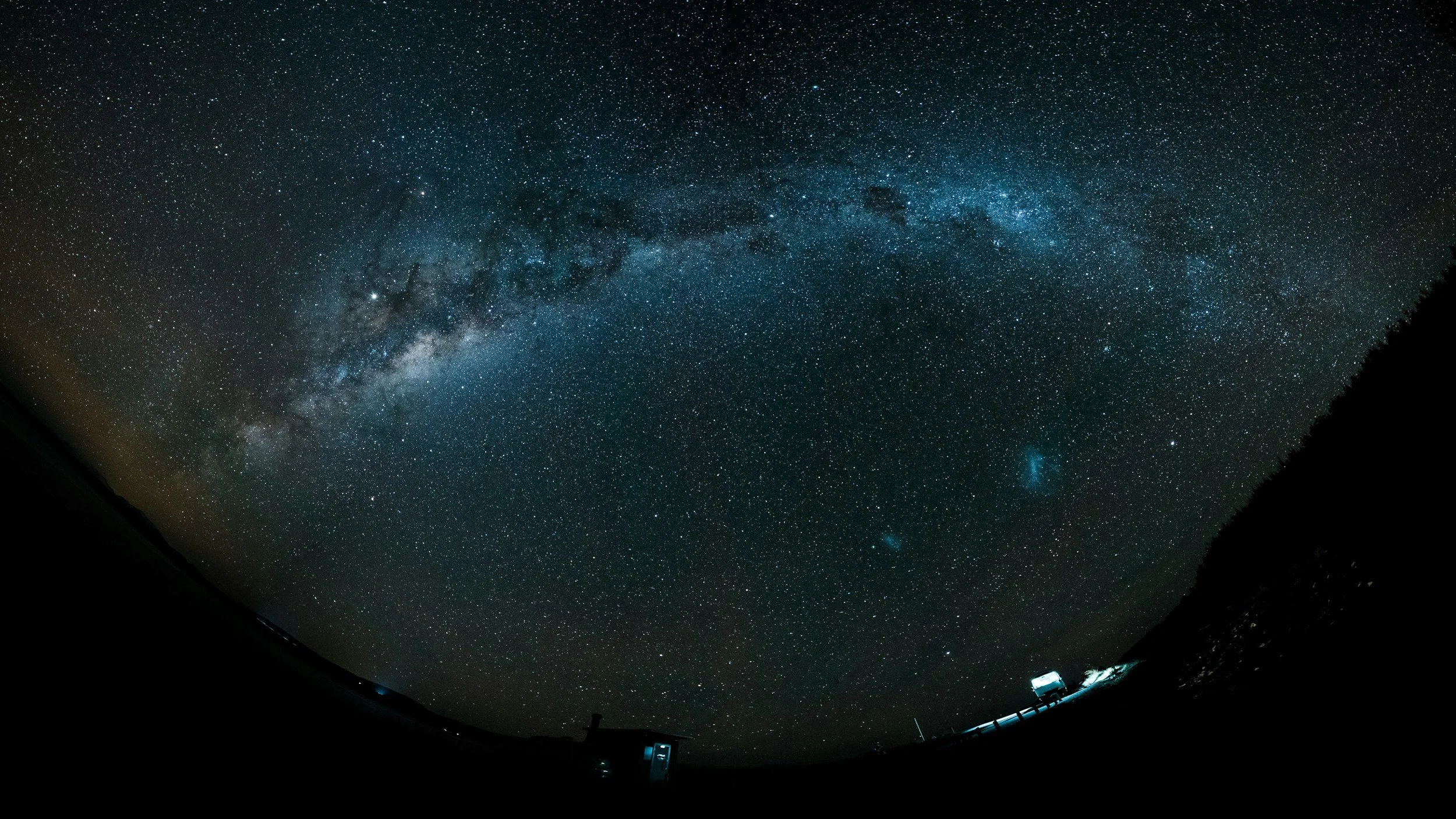
![Night sky with a visible Milky Way galaxy, sprinkled with numerous stars, and a dark landscape silhouette with small structures.]()
Mobile Planetarium
Transform your gym or multipurpose room into a window to the Universe! Our brand-new, state-of-the-art dome seats 25–35 students and features live, customizable journeys through the night sky.
-
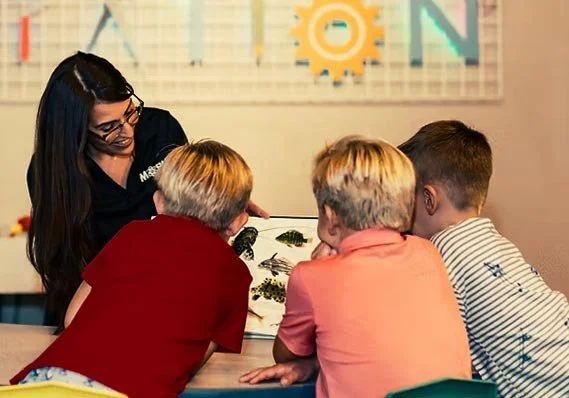
![A woman engaging with three children at a table, showing them a book or educational material, with a colorful educational chart in the background.]()
Workshops
Hands-on, classroom-sized sessions in science or history. From student labs to teacher professional development, our educators bring interactive learning directly to you.
-
![Audience attending a conference or presentation in a dimly lit room with a dark background with circular light reflections.]()
Large Audience Presentation
High- energy, multimedia programs for groups of any size. Our educators bring live demonstrations, and interactive moments to the crowd. These programs are developed to cover a variety of science and history topics.
-
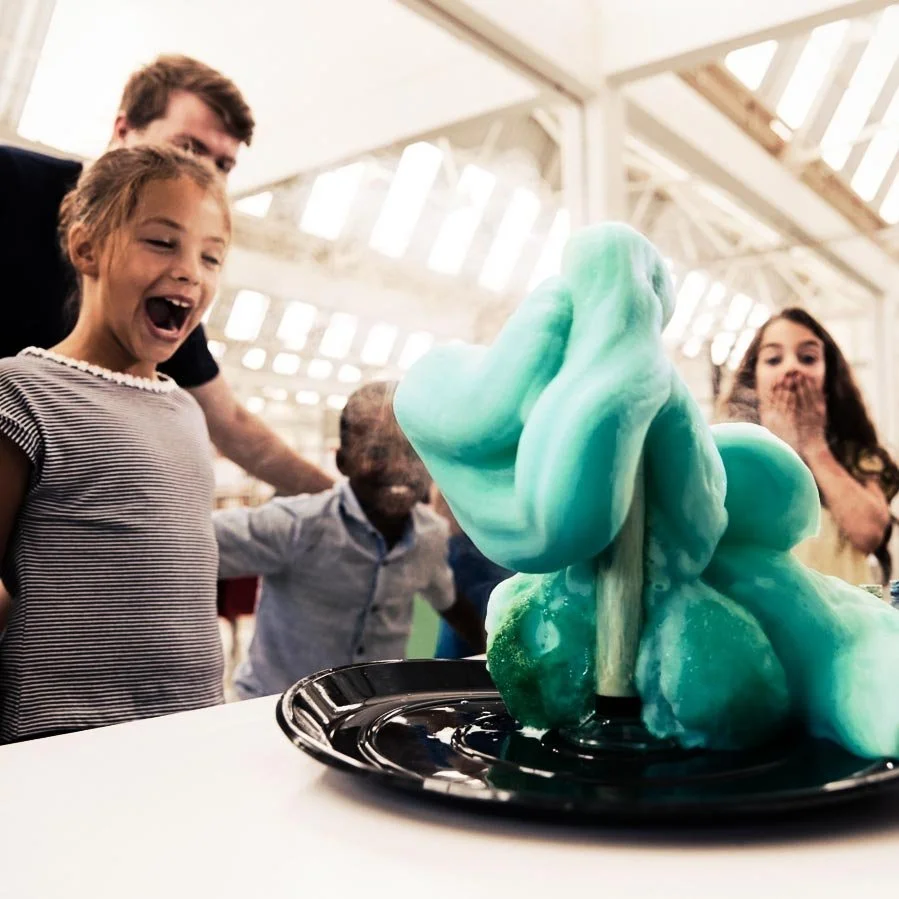
![Children excitedly observing a science experiment with green and blue foam explosion.]()
Science Cafe
Perfect for STEM Nights, festivals, or community events. This mobile setup features tabletop demos, puzzles, and interactive brain teasers to engage audiences as they explore.

Outreach Pricing
Program Fees
First Hour
Each Additional Hour
$500
$200
Duval County
Adjacent Counties
50-75 Mi. from Downtown
Jacksonville*
*Maximum Range of 75 miles
Travel Fees
$0
$25
$50

Museum LIVE! Programs
-
Young children are natural observers, constantly making sense of the world through their senses and experiences. Science on the Go encourages students to ask questions, make observations, compare objects and materials, and explore how things move, sound, and change. Through the process of inquiry, students discover that science is a tool for understanding the world around them and that careful observation can lead to new ideas and explanations.
-
Science is more than a collection of facts. It is a process for exploring questions and building understanding about the natural world. Science Under the Hood examines how observations, evidence, testing, and collaboration help shape scientific knowledge, using examples from the history of discovery to show how scientific ideas are developed, challenged, and refined over time.
-
For as long as humans have looked up, the sky has inspired questions. Space: Questions Without End connects grade-level space science concepts with the process of scientific inquiry, showing how observations and evidence have helped us uncover the stories of Earth, the Solar System, and the universe beyond. Students come away with a deeper appreciation for both the wonders of space and the questions that continue to drive exploration.
-
Energy is constantly moving, changing, and connecting events throughout the natural world. Energy Unleashed!: The Great Chain of Action explores how energy can be transferred, transformed, and conserved as it powers motion, light, sound, heat, and life itself. Students discover that behind every action is a chain of energy changes that helps explain how our world works.
-
From the crackle of static electricity to the brilliance of a lightning bolt, electricity can be both familiar and astonishing. Energy Unleashed!: The Spark of Electrical Power investigates how electrical energy moves, transfers, and transforms into other forms of energy, including light, heat, sound, and motion. Students explore the connections between natural electrical phenomena and the systems that power everyday life.
-
Everything around us is made of matter, from rocks and water to the air we cannot see. What's the Matter? investigates the properties of solids, liquids, and gases, showing how scientists use observation and evidence to understand the materials that make up our world. As students explore the surprising nature of gases, they discover that some of the most important things in science are not always visible.
-
The sky is constantly sending clues about the changing conditions around us. When the Sky Speaks: Weather Unveiled explores the patterns, processes, and observations that help scientists understand weather and its effects on daily life. Students discover how careful observation of the atmosphere can help us explain, predict, and prepare for the ever-changing world above us.
-
The universe has a story, and scientists have spent generations uncovering its chapters. The Whole Shebang: The Story of the Universe follows the history of discovery from the earliest attempts to understand the cosmos through the development of modern ideas about the structure and growth of the universe. Drawing on evidence gathered by astronomers across centuries and incorporating discoveries from today's most advanced observatories, students explore how scientific knowledge grows, changes, and continually reveals new questions about our cosmic origins.
Mobile Planetarium Programs
-
Designed for mixed-age and mixed grade-level audiences, The Universe Revealed explores the scale and structure of the cosmos, from our place in the solar system to the galaxies far beyond. Participants will discover how scientists have come to understand the Universe and our place within it while exploring some of its most fascinating sights and mysteries. This engaging full-dome experience is ideal for groups with a wide range of ages and backgrounds, providing a shared foundation for curiosity and discovery.
-
Designed for our youngest learners, Tiny Astronauts: Discovering Planets and Stars introduces children to the Sun, Moon, stars, and planets through colorful visuals and age-appropriate exploration. Students will observe objects in the sky, learn how Earth is part of a larger solar system, and discover some of the fascinating neighbors that share our corner of space. This program supports early science standards related to observing and describing objects in the natural world while encouraging curiosity about the universe around us.
-
In Tiny Astronauts: Where Earth Is and How It Moves, young learners explore Earth’s place in space and discover how its movements create familiar patterns such as day and night. Through simple observations and interactive discussion, students will learn about Earth, the Sun, and the sky above them while developing an understanding of predictable patterns in nature. This program supports early childhood science concepts related to observing the world around us and recognizing changes that occur over time.
-
First-grade students explore the Sun, Moon, and stars while learning how gravity helps shape the motions of objects in space. Through observations of patterns in the sky and age-appropriate discussions about how gravity keeps planets, moons, and other objects moving through space, students will develop a deeper understanding of Earth's place in the universe. This engaging full-dome program supports first-grade Earth and Space Science standards while encouraging young learners to ask questions and make connections about the world above them.
-
Second-grade students investigate how forces such as pushes and pulls affect motion while exploring the patterns that make life on Earth unique. Students will discover how Earth's journey around the Sun leads to seasonal changes and examine the ways motion and forces influence both everyday objects and celestial bodies. This engaging full-dome program supports Grade 2 science standards by connecting physical science concepts with observations of Earth and space, helping students better understand the dynamic world around them.
-
Explore the vast diversity of stars and discover how our Sun fits among them, from its role as our closest star to the countless others visible through telescopes. Students will examine the structure of our solar system and galaxy while using evidence-based thinking to understand how scientists study and classify objects in space.
-
Explore a universe that runs like clockwork as students uncover the patterns behind day and night, the phases of the Moon, and the seasonal movement of constellations. Through an immersive journey from Earth to the planets and beyond to the Milky Way, learners discover how motion and orbit shape our solar system and our place within it.
-
Fifth-grade students explore the planets, moons, and other objects that make up our cosmic neighborhood while investigating the forces and motions that shape the solar system. Participants will examine the role of gravity, discover patterns created by the movements of Earth and other celestial bodies, and develop a deeper understanding of how our solar system is organized within the vastness of space.
-
Students trace the flow of energy from the Sun to plants, animals, and entire ecosystems, uncovering the connections that sustain life on Earth. Along the way, they will explore how plants capture light energy through photosynthesis, how energy moves through food webs, and how living things depend on this continuous transfer of energy. This program connects key concepts in physical and life science, helping students understand the relationship between energy and the biosphere.
-
Students investigate how water moves through Earth's interconnected systems and explore the conditions that allow water to exist elsewhere in the solar system. By examining the role of solar energy in driving the water cycle, participants will discover how water changes state, shapes planetary surfaces, and supports the possibility of life. The program also explores how water may influence the environments of other worlds. This program connects Earth science concepts to current discoveries beyond our planet, helping students understand water as one of the most important resources in the universe.
-
Students explore the immense scale of the universe and the vast stretches of time over which it has evolved. From the formation of stars and galaxies to the evidence supporting modern theories about the origin and expansion of the universe, participants will examine how scientists investigate phenomena that occur across distances and timescales far beyond everyday experience. This program supports middle and high school Earth and Space Science standards while encouraging students to think critically about humanity's place in an ever-changing cosmos.
Contact Us
-
The Mobile Planetarium capacity varies depending on age of students, inquire for more information
Requires an indoor space that accommodates 25′ x 25’ with a 12′ ceiling
-
Interested in bundled pricing or special programming? Contact the Museum using the Outreach Form to inquire for more information.
Class-based Programs can accommodate up to 30 students at once. Larger groups will be split into multiple programs.
Large audience programs may be performed in an auditorium, cafeteria, or other large indoor space.
-
MOSH can accommodate up to two (2) forms of payment per group. MOSH accepts business / school checks, credit cards, and cash.